The Many Mothers of Baby – Lullabies for Little Criminals

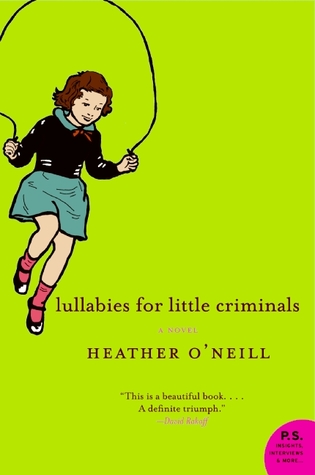
Now that I have finished reading Lullabies for Little Criminals by Heather O’Neill, I decided to look at one specific archetypal figure that I kept noticing while I was reading. This figure is the “Great Mother” figure, and it recurs throughout the novel.

In case you are unfamiliar with archetypes, here is a short video to help you out!

Throughout the novel, Baby feels that she is incomplete, because she does not have a mother, as her biological mother died when she was very young (O’Neill 4). For the first twelve years of her life, Baby was raised by her father Jules, who was only fifteen years old when she was born (O’Neill 4).  He does love her, but is not the best when it comes to taking care of her, often putting his own needs above Baby’s, especially when it comes to feeding his drug addiction (O’Neill 10).

However, Baby encounters multiple “Great Mother” figures throughout the course of the novel, although none of them are permanent. The first mother figure she meets is Isabelle, the foster mother of the group foster home Baby stays at while Jules is in the hospital being treated for tuberculosis (O’Neill 25). Isabelle seems to care for all of the children, and makes sure that they are well fed and properly taken care of. When the time comes for Baby to begin living with Jules again, Baby was hesitant to leave, stating “For a second, I wasn’t sure I wanted to her to let me go. Isabelle was very good about making me not worry about things. For instance, she would write the phone number of the foster home on the inside of my coat in case I got lost. The nights at Isabelle’s house were very quiet. I could really fall into a deep sleep because I knew I would be able to sleep until the morning.” (O’Neill 47). Baby felt a sense of stability living at Isabelle’s, because she was able to settle into a routine, and live in a consistently caring environment, which is a big step up from living with Jules. Jules is only twenty-six, and is a drug addict who lives a very inconsistent life (O’Neill 4).
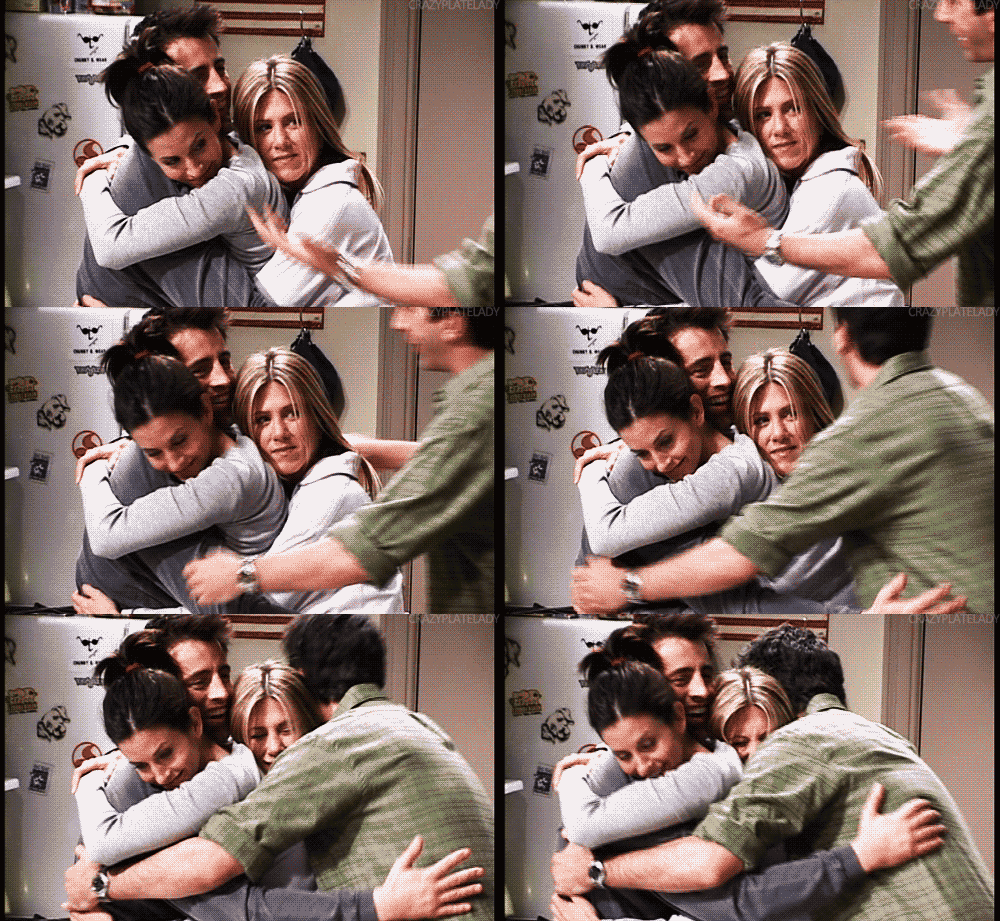
Baby lives with Jules for a while, until he is sent to a rehabilitation centre after being caught by police with heroin (O’Neill 56). Baby’s social workers decide she can live with a neighbour named Mary, another motherly figure (O’Neill 58), who has two sons of her own, Felix and Joshua (O’Neill 59). Felix is the same age as Baby and they are in the same class at school, so they begin to form a bond similar to that of siblings (O’Neill 59). Mary treats Baby like her own child, and Baby begins to feel as if she belongs in this family. She says that “Mary and Felix were both so generous at heart that my being there didn’t seem out of the ordinary for them.” (O’Neill 63). However, all good things must come to an end, and as soon as Jules is out of rehab, he comes to get Baby and they move into a new apartment (O’Neill 88).

Baby lives with Jules again, until their relationship goes South, and she leaves to go live with a pimp named Alphonse (O’Neill 206). Baby beings to lose hope and feels that this is partially to blame on her lack of a mother. She feels like this until she reunites with Jules at the end of the novel, and they are on a bus driving to go meet his cousin Janine (O’Neill 319). During this bus ride, Baby asks Jules if her mother ever loved her (O’Neill 328). Jules replies with “Yes, my God! She loved you. She treated you like a doll. But if she would have lived, she would have loved you properly.” (O’Neill 328). That was the first time anyone had told Baby that she once had a mother who loved her (O’Neill 328), and this filled Baby with hope.

Once they get off of the bus, they meet Janine, who seems like she could be the next, and possibly most permanent, Great Mother figure in Baby’s life. The way Baby describes her first interaction with Janine sounds like she is describing the feeling of home, which is something she hasn’t felt a lot in her short life, “I could feel my heart beating when she hugged me against her, but now it felt fine. Then she held me in front of her, taking a good look at me. Her big blue eyes looked just like Jules’s, and I guess mine too. Her green winter jacket smelled like rain.” (O’Neill 330). This is the last line of the entire novel, and to me, it sounds like Baby has realized that it is okay for her to live without her biological mother, and that it doesn’t make her incomplete as a person. She seems to accept that many other people can be her mother, without having given birth to her.

I really enjoyed reading, as well as analyzing this novel, and I definitely recommend it. Let me know what you think in the comments below!

Works Cited

O’Neill, Heather. Lullabies for Little Criminals: A Novel. Harper Perennial, 2016.

Archetypal Analysis of Lullabies for Little Criminals

Since my last blog post about Heather O’Neill’s Lullabies for Little Criminals, a lot has happened. Before I get into my analysis, let me give you a quick summary.

Baby was living at a neighbour’s home while her father, Jules, was in rehab for his drug addiction. While staying at Mary’s with Mary’s children, Baby finds that she enjoys living in a loving environment, similar to her time at the foster home, where she felt like her foster mom really cared for her. Eventually, Jules finishes in rehab and is able to move back into an apartment with Baby. Baby quickly learns that Jules is a very different person after completing rehab. He is much colder, and seems disinterested in her wellbeing. Baby begins to hang out at a community centre, where she meets a kid named Theo, who doesn’t seem to fit in. Baby shares this with Theo and they quickly become friends, however, Theo is not a good influence on Baby. They break into the home of a girl that was bullying Baby and destroy many of her things. Theo is sent to a foster home shortly after, due to his mother having a breakdown.

Jules and Baby’s relationship isn’t doing too well either. Baby had recently started hanging around with a pimp named Alphonse, and Jules didn’t like this. They get into a massive fight which results in Baby going to juvie. This causes an even larger rift between Jules and Baby, and when Baby returns from juvie, she is not on good terms with Jules. Baby’s relationship with Alphonse quickly develops into a sexual relationship, which prompts Alphonse to “encourage” Baby to work as a prostitute, to make himself some more money. Around this time, Baby starts dating a boy named Xavier, who absolutely loves Baby.

The morning after an incident involving Alphonse hitting Xavier, Baby wakes up to find Alphonse dead next to her. She runs out of the apartment, leaving Alphonse behind, to the Mission down the street. Here she finds Jules, and he tells her that she is going to live with his cousin, outside of Montreal.

There are a couple common archetypal themes that I noticed while reading this novel. There is a lot of focus on how Baby feels that she is lacking a Great Mother figure, since her mother died when she was very young. I think that Baby meets three Great Mother figures throughout the book. The first is her foster mother, who was one of the first people, aside from Jules, to make Baby feel welcome and safe in an unfamiliar environment. The next, and most significant figure, is Mary, the neighbour that Baby stays with while Jules is in rehab. Mary treats Baby as if she is one of her own children, and Baby is sad to leave Mary’s home. She felt like she was a member of the family, and for once didn’t feel out of place. The third figure in Baby’s life is her father’s cousin Janine. We only meet Janine at the very end of the novel, but it is a very positive interaction that I think would continue to grow into something very good for Baby, if the story were to continue. Baby describes their hug in a way that makes it sound like she is being welcomed into a new family, “Then Janine stepped over to me and squeezed me hard. I could feel my heart beating when she hugged me against her, but now it felt fine. Then she held me in front of her, taking a good look at me. Her big blue eyes looked just like Jules’s, and I guess mine too.” (O’Neill 330)

“Mary and Felix were both so generous at heart that my being there didn’t seem out of the ordinary for them.” (O’Neill 63)

There are also a few symbols that stood out to me, as they were mentioned or referenced throughout the novel.

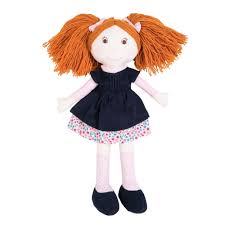
The first symbol that I noticed was dolls. Baby has a doll named Roxanne that was given to her by her mother. She loves this doll, and considers it to be one of her only prized possessions. I think that this doll represents her relationship with Jules. One day, Jules ripped Roxanne out of his frustration with Baby, but ended up sewing it back together. He ends up ripping the doll apart, around the same time their relationship begins to crumble. This crushes Baby, causing her to feel empty.

“Now I was a nothing, a real nobody.” (O’Neill 119)

At the end of the story, after Baby and Jules are reunited, Jules gives Baby a beautiful new doll. I think this symbolizes how they are about to start a new chapter in their lives, and start fresh.

Another big symbol in Lullabies is Baby’s last baby tooth. She loses it while she is staying at Mary’s house. “I put my hand up to my mouth and spit out a tooth… It was my last baby tooth.” (O’Neill 64). I think that this tooth represents Baby’s innocence. Shortly after losing this tooth, Baby tries magic mushrooms for the first time. She later goes on to smoke weed, cigarettes, as well as become a prostitute after losing her virginity to Alphonse the pimp. Alphonse also allows her to try heroin for the first time, which was a huge moment in the book, as Jules is also a heroin addict.

This book is full of symbols and themes to explore, and I really enjoyed reading it. Let me know what you think in the comments!

Works Cited

O’Neill, Heather. Lullabies for Little Criminals: a Novel. Harper Perennial, 2016.

Lullabies for Little Criminals

I am currently reading Lullabies for Little Criminals by Heather O’Neill. I am about a third of the way into the book and I am really enjoying it so far. I often find that the books I read for school feel like a chore to complete. This has not been the case for Lullabies for Little Criminals whatsoever. I found that this book grabbed my attention right from the beginning of the first chapter. Lullabies is told from the point of view of Baby, a 12-year-old girl, who at the beginning of the story is living in Montreal with her father Jules, who happens to be a broke drug-addict. Baby was born when her parents were both only 15 years old, and her mother died when she was very young.

Jules often prioritizes his needs over Baby’s, especially when it comes to his drug addiction. On Baby’s 12th birthday, Jules has one of his friends over (a fellow drug addict) who suddenly says, “Let’s go get some chocolate milk!” (O’Neill 9). Baby then goes on to explain that “Jules and his friends had been calling heroin chocolate milk for years” (O’Neill 10) and that “they did it so they could at least pretend that I didn’t know what was going on.” (O’Neill 10). Baby is eventually put into a foster home outside of Montreal, but not as a result of Jules’ neglecting behaviour. Jules is being treated in the hospital for tuberculosis. At the foster home, Baby begins to feel a sense of community, as she is surrounded by other kids facing similar issues to her own.

I have found that although I cannot relate to the problems that Baby is facing, I can relate to some of the feelings she is experiencing. After visiting Jules in rehab, Baby comes to the conclusion that to be able to bond with her father again, she needs to become a drug addict. Baby thinks that being a drug addict is the key to being a cool adult, which is exactly what she wants to be. Baby is in a rush to grow up, and I remember feeling this way when I was 12, although it was for a totally different reason (I had no intention of becoming a drug addict). Baby later reflects back on how she felt at this time and realizes that she was upset for the wrong reasons. “I don’t know why I was upset about not being an adult. It was right around the corner. Becoming a child again is impossible. That’s what you have a legitimate reason to be upset over.” (O’Neill 77).

Lullabies for Little Criminals is written in first person, from the point of view of Baby. I think that this has really helped me enjoy the story to the fullest. In my opinion, first person point of view helps the reader to connect with the characters in the novel and understand what they are going through. I was worried about being able to connect with this book’s characters, but Heather O’Neill has done a wonderful job creating a character that is someone you want to get to know better.

“Childhood is the most valuable thing that’s taken away from you in life, if you think about it.” (O’Neill 77)

Let me know what you think in the comments!

Works Cited

“Heather O’Neill.” HarperCollins Canada, http://www.harpercollins.ca/author/cr-100079/heather-oneill/.“Lullabies for Little Criminals by Heather O’Neill.” Goodreads, Goodreads, 17 Oct. 2006, http://www.goodreads.com/book/show/22207.Lullabies_for_Little_Criminals.“MTL Moments.” Tourisme Montréal, 9 July 2019, http://www.mtl.org/en.ONeill, Heather. Lullabies for Little Criminals: a Novel. Harper Perennial, 2016.“Tuberculosis (TB).” HealthLink BC, http://www.healthlinkbc.ca/health-topics/hw207301.

My New Favourite Podcast?

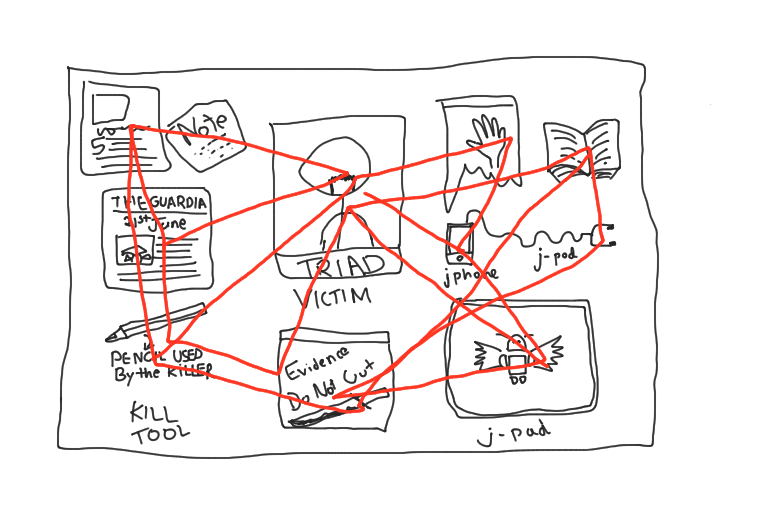
I really enjoyed this podcast, and I definitely think that I will continue to listen to it, so that I can find out where this story goes. I was already a fan of podcasts in general before listening to this specific one, so I am a bit biased. I really liked the style of story telling that Serial has gone with. It felt very natural to me, almost like I was sitting down with Sarah and she was personally explaining everything about this case to me.

I think that presenting investigative journalism as a podcast is a very interesting idea, that you could go a lot of ways with. It would be interesting to listen to this podcast as it was being released, as it would make the listeners feel like Sarah did, as she was making connections and coming to conclusions while investigating this case. It would also be very interesting to listen to a podcast that was being released and recorded every time the journalist found new information that was potentially relevant to the case.

I think that the victim’s family would probably be upset that Serial has become so popular. It is basically attempting to argue that Adnan is not guilty, which is likely not something that Hae’s family would like to be hearing about. However, it is bringing more awareness to Hae’s story, which could be something that her family wants, or something that they would like to completely ignore.

I generally prefer to read texts, because I find that I retain more of the information. I did, however, really enjoy listening to this specific podcast. I found it really interesting to be able to hear each specific person’s voice and how they intended their thoughts to be heard and interpreted. I think that with a subject like the one Serial focuses on, being able to hear the person’s tone of voice is incredibly important, and it greatly influenced my opinion of this case. There were some drawbacks as well. I found it frustrating that I couldn’t follow along to the text while listening, like you can with most TedTalks. It was also difficult to rewind to a specific point in the podcast, if I found myself wanting to listen to a part again to gain a better understanding of what was being discussed.

I personally think that the human memory is an extremely unreliable source, especially when it comes to court cases like the one in Serial. As someone who can barely remember what she ate for dinner two days ago, I don’t think that I should be trusted to recall what I did on any given day in court. This causes me to wonder how the rest of this podcast will unfold. There are a few different retellings of the same day floating around this case, but how do we know which one is the most credible without any physical proof?

Let me know what you thought of the podcast in the comments!